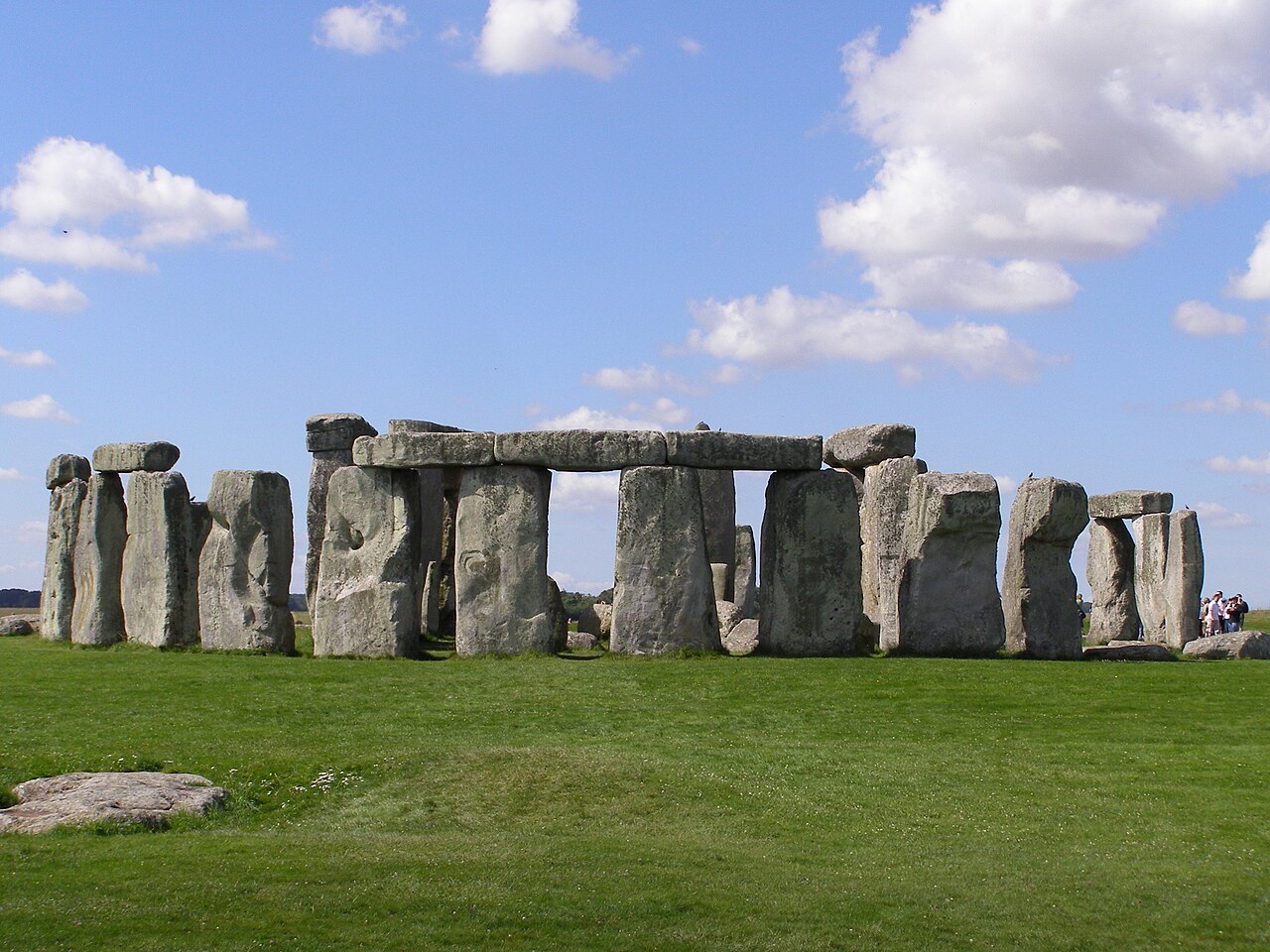
Stonehenge stands as a silent sentinel on the Salisbury Plain, a prehistoric monument whose very existence continues to baffle and inspire. Often compared in age to the Egyptian pyramids, its purpose, construction, and the origins of its colossal stones have long been shrouded in mystery. For millennia, this iconic circle of megaliths has prompted questions about the ingenuity, beliefs, and sheer determination of Neolithic peoples. Among its many enigmatic features, one stone, in particular, has held a central, yet profoundly misunderstood, position: the Altar Stone.
Recent groundbreaking research has finally cast a brilliant light on the Altar Stone, unraveling one of Stonehenge's most enduring puzzles and rewriting a century of archaeological assumptions. This isn't just about geology; it's about peeling back layers of time to reveal startling new insights into the monument's true Stonehenge's Altar Stone: Northeast Scotland is the True Origin and the profound connections of its builders across ancient Britain. Welcome to a new chapter in understanding the stonehenge mystical origins.
The Enduring Enigma of Stonehenge's Altar Stone
Stonehenge, a UNESCO World Heritage site located in Wiltshire, southwest England, began its life approximately 5,000 years ago. Over the course of two millennia, it underwent several phases of construction, evolving into the majestic stone circle we recognize today. Composed primarily of two distinct types of stone – the massive sarsens and the smaller bluestones – the monument is a testament to extraordinary prehistoric engineering and societal organization.
At the very heart of this ancient complex lies the Altar Stone. Weighing an impressive 6 tons, measuring roughly 16 by 3 feet and about 20 inches thick, it is undeniably unique within the monument. As Richard Bevins, an author of the pivotal Nature study, aptly notes, it stands apart "in terms of its size, weight, rock type and position." Made of sandstone, it was traditionally grouped with the bluestones, a classification that, as we now know, led to a century of misdirection regarding its true provenance.
For all its prominence, the Altar Stone has remained shrouded in secrecy. Its exact arrival date at the site is debated, though it's thought to have been placed within the central horseshoe of stones during the monument's second construction phase, roughly between 2620 and 2480 B.C. Perhaps even more perplexing is its ultimate purpose. Did it always lie recumbent as we see it today, or did it once stand erect? Was it a focal point for rituals, sacrifices, astronomical observations, or something else entirely? These questions have only deepened the mystique surrounding its stonehenge mystical origins.
Rewriting History: From Welsh Shores to Scottish Highlands
For more than a hundred years, the prevailing hypothesis, first put forth by geologist H.H. Thomas in 1923, suggested that the Altar Stone originated from West Wales. This theory was largely based on the belief that all the "bluestones" (a general term for the smaller igneous and metamorphic rocks at Stonehenge) came from a restricted area within that region. While subsequent research correctly identified West Wales as the source for most of the bluestones, the Altar Stone's specific origin remained a persistent puzzle, despite being traditionally lumped in with its smaller counterparts.
The scientific community, including researchers involved in the recent breakthrough, began to cast doubt on this long-held Welsh hypothesis in recent years. The true origin of this crucial stone became an open, compelling question. That is, until now.
A landmark study, published in the esteemed journal Nature, has delivered an astonishing revelation: the iconic Altar Stone very likely came from what is now northeast Scotland. This represents a staggering shift in our understanding, relocating its source from Britain's southwest to its extreme northeast – an immense journey across the island.
How was this incredible discovery made? The research team meticulously analyzed the age and chemical composition of mineral grains found within sample fragments of the Altar Stone. The results were definitive: the geological "fingerprint" of these grains was statistically indistinguishable from rocks found in outcrops in northeast Scotland. Crucially, these characteristics were clearly and distinctly different from any bedrock found in Wales. This definitive evidence has not only debunked a century-old theory but has profoundly altered our understanding of the stonehenge mystical origins, demonstrating that new research rewrites Stonehenge's stone map entirely.
The Herculean Journey: Implications for Ancient Transport
The revelation that the Altar Stone originated in northeast Scotland fundamentally transforms our appreciation for the logistical prowess and ambition of the Neolithic people who built Stonehenge. Consider the scale: a 6-ton slab of sandstone transported over 500 miles, traversing the entire length of Great Britain, from its rugged northern reaches to the Salisbury Plain in the south. This journey dwarfs even the impressive transport of the bluestones from West Wales, a distance of approximately 140 miles.
This discovery forces us to reconsider the complexity of Neolithic society. How was such an immense undertaking achieved without the wheel or advanced machinery? Various theories abound:
- Overland Dragging: Using sledges on rollers, pulled by teams of people or animals, across vast and varied terrain.
- Coastal and River Routes: Utilizing rafts or boats to navigate rivers and coastal waters, perhaps floating the stone for significant portions of its journey.
- Organized Labor: Such a feat would require an incredibly well-organized, disciplined, and large workforce, implying a sophisticated social structure capable of coordinating such a monumental project.
- Shared Belief Systems: The willingness to transport such a heavy and unique stone over such a vast distance suggests a powerful shared belief system or cultural imperative that transcended local tribal boundaries.
This long-distance movement of the Altar Stone from Scotland adds another layer of awe to the construction of Stonehenge. It suggests extensive contact, trade, or perhaps even alliances between communities separated by hundreds of miles. It challenges our preconceived notions of "primitive" societies, revealing instead a highly resourceful, connected, and determined populace driven by motivations we are only just beginning to grasp.
Unraveling the Mystique: Why Scotland, Why the Altar Stone?
The new geological evidence definitively answers "where" the Altar Stone came from, but it deepens the "why." Why this specific stone? Why travel such an extraordinary distance when other stones were sourced from much closer quarries?
- Symbolic or Spiritual Significance: Perhaps the sandstone from northeast Scotland possessed qualities that were deemed particularly sacred or powerful by the builders. Its color, texture, or even its geological age might have held profound symbolic meaning, connecting the monument to distant, revered landscapes or ancestral homelands. This possibility strongly reinforces the idea of stonehenge mystical origins.
- Unique Aesthetic Properties: The stone might have had a unique visual appeal that made it stand out, even from a great distance. It's possible that its distinct characteristics were specifically sought after for the monument's central element.
- Durability or Practicality: While sandstone might not be as immediately robust as some igneous rocks, perhaps it possessed certain desirable qualities for its intended purpose, whether for carving or its ability to withstand specific forces.
- A Statement of Power or Connection: Sourcing a monumental stone from the far reaches of the island could have been a powerful statement – a display of influence, a testament to extensive trade networks, or a symbolic act uniting disparate regions of Britain under a common purpose.
The name "Altar Stone" itself is a modern interpretation, derived from antiquarian theories about the monument's use. Its true purpose remains largely speculative. Could it have been an altar for ceremonies? A cosmological marker? A healing stone? The newfound Scottish origin only amplifies the mystery, suggesting that its perceived "mystical" qualities might have been inherent to its source, driving its epic journey.
Future Research and What Remains Unknown
While the recent discovery is monumental, it also opens up new avenues for inquiry. Future research will undoubtedly focus on:
- Pinpointing the exact quarry or outcrop in northeast Scotland.
- Understanding the specific route taken for its transport, whether primarily overland, coastal, or a combination.
- Further refining the date of its arrival and placement at Stonehenge.
- Investigating the cultural connections between the communities of northeast Scotland and the builders of Stonehenge.
- Delving deeper into the potential symbolic and ritualistic significance that necessitated such an extraordinary undertaking.
A Timeless Testament to Human Ingenuity
The unraveling of the Altar Stone's true origin from northeast Scotland represents a staggering leap forward in our understanding of Stonehenge. It challenges century-old assumptions, highlights the incredible logistical capabilities of Neolithic peoples, and adds an even deeper layer of intrigue to the monument's creation. Far from diminishing its mystery, this discovery only enhances the wonder surrounding Stonehenge, reinforcing its status as a timeless testament to human ingenuity, cultural complexity, and the enduring power of shared belief. As research continues to unfold, we inch closer to fully decoding the profound and truly global stonehenge mystical origins, reaffirming its place as one of the world's most captivating ancient sites.