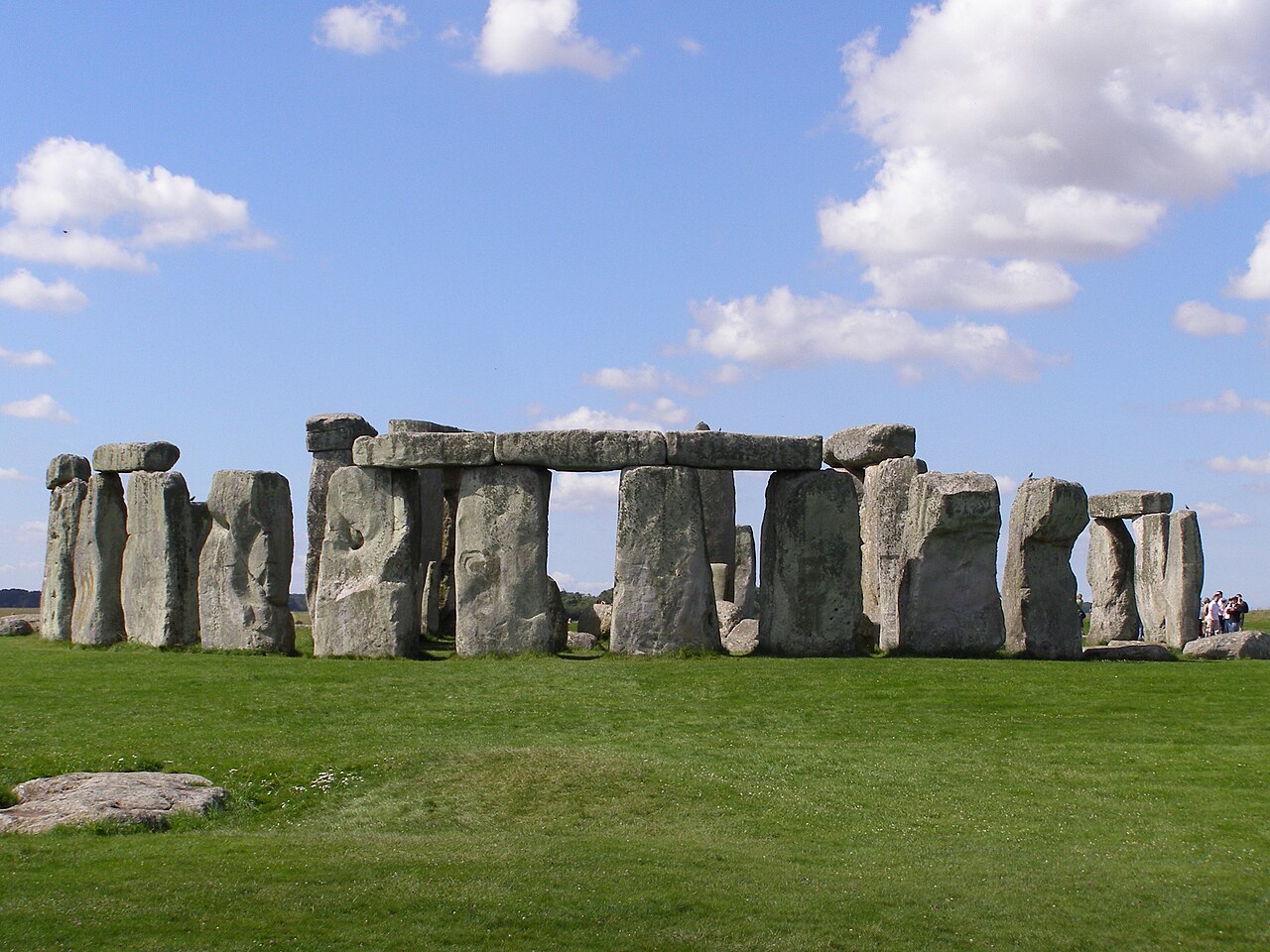
Stonehenge stands as a silent sentinel on the Salisbury Plain, its colossal stones whispering tales of a prehistoric past shrouded in mystery. For millennia, this iconic monument has captivated humanity, its purpose and the incredible effort behind its construction fueling endless speculation. While some of its long-held secrets remain guarded, recent groundbreaking research is now rewriting significant chapters of its story, particularly regarding the very bedrock of its construction. This new understanding sheds an astonishing light on the true geographical scope of its builders' ambition, profoundly reshaping our perception of decoding Stonehenge: the Altar Stone's mystical origins uncovered.
The Enduring Enigma of Stonehenge and Its Stones
Often compared in age and mystery to the Egyptian pyramids, Stonehenge is a marvel of Neolithic engineering and cultural significance. Its construction is believed to have commenced around 5,000 years ago, with continuous modifications and additions spanning over two millennia. The monument itself is a complex arrangement of massive stones, or megaliths, broadly categorized into two main types: the enormous sarsen stones and the smaller, yet still substantial, bluestones.
Until recently, our understanding of the origins of these stones was relatively stable. Most of the imposing sarsen stones, some weighing up to 30 tons, were traced back to the West Woods near Marlborough, a mere 15 miles from the monument. The bluestones, while smaller, presented a more intriguing puzzle, with a majority confidently identified as originating from west Wales, an impressive journey of 150-200 miles. This established narrative painted a picture of industrious ancient communities capable of remarkable feats of transportation and construction, but it also hinted at profound connections to specific, perhaps sacred, landscapes in the southwest of Great Britain.
The Altar Stone: A Unique Component at the Heart of the Mystery
Nestled within the central horseshoe of stones, the Altar Stone is a crucial, yet enigmatic, element of Stonehenge. Unlike the other bluestones and sarsens, this singular sandstone slab, roughly 16 feet long, 3 feet wide, and 20 inches thick, possesses distinct characteristics that have always set it apart. As Richard Bevins, an author of the recent groundbreaking study, noted, the Altar Stone is "unique in the monument, in terms of its size, weight, rock type and position in the monument."
For over a century, the prevailing belief, first proposed by geologist H.H. Thomas in 1923, was that the Altar Stone, like the other bluestones, originated from west Wales. This hypothesis was based on the then-held assumption that all bluestones shared a common regional source. However, despite its pivotal location and uniqueness, remarkably little was known about its true provenance, its precise arrival date on site, or its original purpose – whether it stood erect or was always recumbent. The Altar Stone's inclusion is thought to date back to the monument's second construction phase, roughly between 2620 and 2480 B.C., a period when significant changes were made to Stonehenge's core structure.
From Wales to Scotland: Rewriting the Stone Map
The long-standing Welsh origin theory for the Altar Stone has now been decisively overturned by a comprehensive study published in the journal Nature. This revolutionary research has traced the Stonehenge's Altar Stone: Northeast Scotland is the True Origin, revealing a monumental undertaking far exceeding previous estimations and fundamentally altering our understanding of the monument's "stone map."
The research team employed sophisticated analytical techniques, focusing on the age and chemical composition of individual mineral grains within sampled fragments of the Altar Stone. This meticulous scientific detective work yielded astonishing results: the unique age and chemistry fingerprints of these grains were statistically indistinguishable from those found in specific rock outcrops in northeast Scotland. Crucially, these markers were distinctly different from any bedrock found in Wales.
This finding is nothing short of a paradigm shift. Instead of a journey of 150-200 miles from Wales, the Altar Stone now appears to have been transported an incredible distance of over 500 miles, from the furthest reaches of Great Britain to the Salisbury Plain. Imagine the sheer logistical challenge facing Neolithic people: moving a six-ton slab of sandstone across vast and varied terrain, potentially over land and by sea, without modern machinery. This discovery doesn't just rewrite a geographical detail; it profound impact on our understanding of stonehenge mystical origins.
Implications for Stonehenge's Mystical Origins and Builders
The revelation that the Altar Stone hails from northeast Scotland adds an entirely new layer of wonder and complexity to Stonehenge's story. It challenges us to reconsider the capabilities, motivations, and cultural networks of the prehistoric people who built this monument. What compelled them to undertake such an extraordinary journey for this particular stone?
- Unprecedented Ambition: The long-distance transport from Scotland demonstrates an unparalleled level of ambition, organization, and resourcefulness. It suggests a society with advanced planning, a workforce capable of sustained, collective effort, and perhaps even established trade routes or cultural connections spanning the entire island.
- Unique Significance: The Altar Stone's unique characteristics – its size, sandstone composition (contrasting with the volcanic bluestones), and its central position – strongly suggest it held a special, perhaps sacred, significance. Was its source location itself considered mystical or powerful? Did the stone possess specific properties, perhaps resonant or visually distinctive, that made it essential for the monument's spiritual function?
- Rethinking Cultural Connections: This new origin might indicate a broader cultural sphere of influence than previously imagined, connecting communities from the very south to the far north of Britain. It opens up new avenues for archaeological inquiry into the relationships between these geographically distant groups during the Neolithic period.
- Ongoing Discovery: The Altar Stone's story is a powerful reminder that archaeology is a dynamic field. What we consider established fact today can be overturned by new scientific methods and dedicated research. Each new discovery refines our picture of the ancient world, deepening our appreciation for its complexities.
The journey of the Altar Stone from Scotland paints a picture of builders driven by something profound – perhaps a deep spiritual connection to certain landscapes, a desire to incorporate specific materials imbued with symbolic power, or an ambition to create a monument that physically embodied the vastness of their known world. It transforms our understanding of the monument's purpose, hinting at a web of beliefs and practices far more intricate than previously conceived, truly enriching the narrative around stonehenge mystical origins.
Conclusion: An Ever-Unfolding Story of Ancient Ambition
The unveiling of the Altar Stone's true Scottish origins is a monumental discovery that revitalizes the narrative of Stonehenge. It repositions this iconic monument not just as a symbol of local or regional power, but as a testament to an island-wide cultural and spiritual endeavor of staggering proportions. This research underscores that even after centuries of study, Stonehenge continues to surprise us, challenging our assumptions and revealing new dimensions of its ancient builders' ingenuity and determination. As scientists continue to delve into its secrets, the story of Stonehenge remains an ever-unfolding epic, reminding us that its stonehenge mystical origins are still being pieced together, one stone, and one incredible journey, at a time.